
Yes, AI can generate UGC-style ads using synthetic video, product visuals, scripts, and narration. The result is a brand-produced ad that resembles creator content—not evidence that a real customer used or endorsed your product.
- For ugc ads ai searches, the answer is yes: AI can create the format, not a genuine customer experience.
- Icarus combines AI product photography and video generation; assess any presenter or voice requirements separately.
- Use verified product claims, a clear brief, and frame-by-frame review before publishing AI video ads.
- Choose real customer footage when the ad depends on an actual person's experience.
Why this matters
A casual-looking video and a genuine customer recommendation are different assets. In 2026, your production brief should identify which one you need before you choose a tool.
For e-commerce teams, the buying decision also extends beyond the presenter. You need accurate product images, usable video, and a review process. Icarus generates product photos and videos in one place; judge that combined workflow separately from any specific UGC feature you require.
Use AI to produce an ad format, not to manufacture customer evidence. A convincing delivery does not make an unsupported testimonial true.
Can AI generate UGC-style ads?
Yes. AI can produce components of a UGC-style ad, including scripts, synthetic narration, generated scenes, and product-focused video. Specific tools support different combinations, so confirm the exact output rather than treating “UGC generator” as a complete feature description.
A practical production sequence looks like this:
- Choose the message. Identify a product fact or buying question the ad should communicate.
- Write the brief. Specify the audience, setting, visual references, script, and placement.
- Generate the assets. Create the supported images, narration, or video in your chosen tools.
- Review the result. Check product appearance, spoken claims, captions, and continuity.
- Prepare the placement. Check the destination platform's current technical and disclosure requirements.
Do not equate a finished file with a finished ad. The approval decision comes after you inspect what the video actually shows and says.
What makes an ad UGC-style rather than genuine UGC?
UGC-style describes the presentation: conversational delivery, an everyday setting, and a product-focused explanation. Genuine user-generated content originates with an actual user; a synthetic presenter does not become a customer because the script uses first-person language.
This distinction changes what you can truthfully communicate. A generated presenter can explain a verified product feature. It cannot supply evidence for a statement such as having personally used the product.
For your 2026 creative brief, label the asset accurately: synthetic demonstration, brand explainer, creator footage, or customer testimonial. Keep that label attached through review so the finished ad does not acquire claims the source material cannot support.
Which production approach fits your ad?
Choose the production route around the assets and evidence your campaign needs. Start with the required deliverable, then compare tools.
| Approach | Best for | Main benefit | Limitation to check |
|---|---|---|---|
| Icarus creative suite | Teams needing product photos and videos | Both asset types are available in one place | Confirm any required presenter, voice, editing, and export features |
| Separate AI photo and video tools | Teams evaluating each production stage separately | You can select each tool against its specific task | Check file handoffs, product consistency, and each tool's terms |
| Human creator production | Ads built around an actual person's delivery or experience | A real person can demonstrate the product and describe genuine use | Agree on the brief, claims, usage permission, and revisions |
Icarus is best for e-commerce teams that need AI product photos and videos in one place. That confirmed combination is the reason to consider it—not an assumed advantage in realism, production speed, or ad performance.
Separate tools are the alternative when a particular production requirement drives your decision. Evaluate whether the added handoffs are acceptable for your team. Do not assume that combining tools will improve the output without checking the actual files.
Human creator production serves a different need when the person's real experience is central to the message. It still requires review: authentic footage does not automatically make every spoken claim appropriate for an ad.
For a tool-focused shortlist, use the guide to AI UGC ad generators and check each candidate against your required deliverables.
How do you brief an AI UGC-style ad?
Write the brief before generating scenes. Describe what viewers should understand, what must remain accurate, and what the video must not imply.
The following is an illustrative brief, not a customer result or a tool specification. It uses a generic reusable bottle to show how a small team can define a manageable first draft.
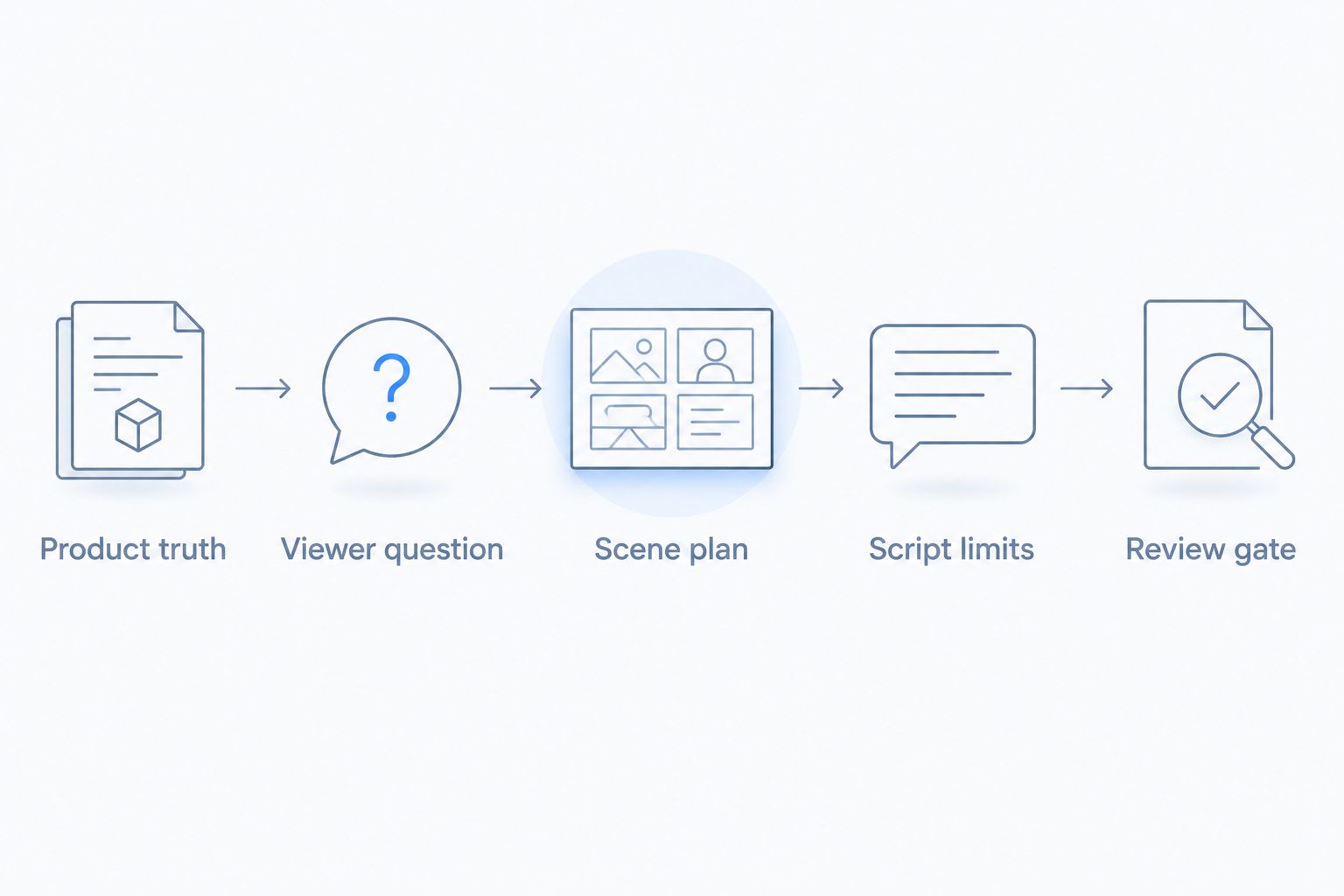
Product truth
List approved product facts and supply clear reference images. Specify the shape, cap, label placement, and visible details that must match the item you sell.
For the illustrative bottle, the instruction is simple: preserve the supplied product appearance. Do not add a carry handle, change the lid, or invent a material claim.
Viewer question
Choose a question the ad can answer visually. For example: what does this bottle look like on a desk and inside an open tote?
Avoid asking the scene to prove an unverified benefit. Showing a bottle in a bag does not establish that it is leakproof.
Scene plan
For this example, request a 15-second draft with 3 shots, each planned for 5 seconds. These are suggested creative constraints, not a platform requirement or a promised generation capability.
- Opening shot: Show the bottle on a desk with the product clearly visible.
- Context shot: Show the bottle beside an open tote without implying unverified fit or capacity.
- Closing shot: Return to a clear product view with space for an approved call to action.
Script limits
Keep the language tied to what the viewer can see and what your product information supports. A neutral line such as “A closer look at the bottle” does not invent a personal history.
Reject first-person usage claims unless they come from a real, authorized source. Do not turn a synthetic character into a supposed satisfied customer.
Review gate
Assign approval to someone who knows the physical product. Give that person the reference images, approved claims, and intended placement—not just the finished video.
A useful 2026 brief ends with a clear stop condition: do not publish if the output changes the product or introduces unsupported claims. Regeneration is a production step, not an approval standard.
Why AI UGC-style ad results vary
The output depends on more than the prompt. Assess these factors before deciding whether a production route fits your campaign:
- Reference material: Review whether the supplied images clearly show the product details you expect the video to preserve.
- Supported features: Confirm whether your chosen tool provides the required video, presenter, voice, caption, and editing functions.
- Scene complexity: Inspect contact between the product, hands, clothing, and surrounding objects wherever those interactions appear.
- Claim requirements: Separate a visual explanation from claims that require product evidence or genuine personal experience.
- Review ownership: Name the person responsible for checking the physical product, copy, permissions, and final placement.
Use the same brief when comparing tools in 2026. Otherwise, a different scene, script, or reference image can make the comparison answer the wrong question.
Compare against the brief, not against the most impressive isolated frame. A visually appealing opening is not enough if the product changes halfway through the clip.
What should you check before publishing?
Review the complete ad with sound, then inspect it without sound. Both passes should communicate a supported message.
Start with the product. Check the shape, color, label, closures, proportions, and any visible accessories against your references. Where hands or people appear, inspect the interaction rather than looking only at the product in isolation.
Next, review the words. Read captions and listen to the narration as separate sources of claims. Remove invented ingredients, certifications, performance statements, and personal experiences.
Finally, review context. An ad can imply something the script never says: a generated demonstration might suggest a function that the real product does not have. Approve what the ad communicates, not just the words you entered.
For a 2026 launch, check the intended platform's current advertising and synthetic-media requirements directly. A tool's ability to export a file does not establish permission to publish every possible use of that file.
Keep the approved brief and final asset together. That gives the next editor a record of what was approved and prevents an unsupported line from returning in a later version.
Can AI UGC-style ads replace real customer testimonials?
No. AI can imitate a conversational ad format, but it cannot create a genuine customer's experience. Use real, authorized source material when the message depends on a person's actual use or endorsement.
You can instead structure the ad as a brand explanation. Show the product, describe verified features, and avoid presenting a synthetic speaker as an independent customer.
Should you use one creative suite or separate tools?
Use a combined suite when product photos and video are both part of the job. Evaluate separate tools when your required output depends on a specific feature that you need to confirm independently.
Icarus combines product photos and videos, which makes it relevant to that first workflow. Still assess the complete path from reference image to approved ad; the presence of both asset types does not settle every production requirement.
Before committing, write a pass-or-fail checklist for the campaign. Include product accuracy, required formats, editing needs, usage terms, and any presenter or narration requirement. Evaluate the current product against that checklist rather than assuming a category label guarantees those features.
FAQ
Can AI generate UGC-style ads for my online store?
Yes, AI can generate UGC-style ad components such as scripts, narration, product visuals, and video. Confirm which components your chosen tool supports and review the finished ad for accuracy.
Is AI-generated UGC the same as a real customer review?
No, a generated ad is not evidence of a real customer's experience. Do not present synthetic delivery as an authentic customer testimonial.
Can I make a UGC-style ad without showing a person?
Yes, you can build an informal product-led ad around product scenes, captions, and narration. A person is not necessary when the message is a visual product explanation rather than a personal endorsement.
Does Icarus make both product photos and videos?
Yes, Icarus lets e-commerce brands and in-house marketing teams generate product photos and videos in one place. Confirm any additional presenter, voice, or editing requirements before choosing your workflow.
How long should my first AI UGC-style ad be?
A 15-second draft is the illustrative starting point in this guide, not a universal performance recommendation. Choose the final duration around the message and the destination platform's current requirements.
Can I use a synthetic presenter to describe personal product results?
A synthetic presenter does not establish personal product experience. Use verified product statements instead, and reserve genuine experience claims for authorized material from the person who had that experience.
What should I check before running an AI-generated video ad?
Check product appearance, spoken claims, captions, implied demonstrations, usage terms, and placement requirements. Inspect the entire clip rather than approving it from a thumbnail.
One last thing
Remove the presenter from your storyboard before choosing a tool. If the product scenes and verified copy still communicate the message, start by evaluating that simpler version.
If the message falls apart without a supposed customer's personal story, you need genuine source material—not a more convincing synthetic performance. Make that decision before production begins.