
The cost of ad creative testing per week is your ad spend plus creative production, tool usage, and the labor required to prepare, review, and report on the test. For a 2026 budget, count revisions and rejected drafts too: buying media and making the ads are separate expenses.
- The cost of ad creative testing per week includes media, production, software, and review—not just ad spend.
- Icarus combines AI product photography and video generation; consider it when your weekly brief needs both formats.
- Budget around approved, usable ads rather than generated drafts.
- Keep cash paid this week separate from the share of subscriptions used this week.
How much does a week of ad creative testing cost?
Your weekly testing budget equals media spend plus the full cost of producing and evaluating the ads. Build the estimate from your planned work rather than assigning a universal amount to a week.
For subscriptions, use the current terms on the pricing page. Keep those charges separate from your advertising account's spending limit.
| Budget component | What belongs in it | What to record |
|---|---|---|
| Media | Paid distribution of the test ads | Planned spend and actual spend |
| Production | Briefing, image creation, video creation, editing, and exports | Internal hours and external charges |
| Software | The portion of creative subscriptions and usage assigned to the test | Included usage, additional usage, and allocation method |
| Review | Product checks, copy checks, revisions, and approval | Review hours and rejected outputs |
| Evaluation | Campaign setup, result review, and the next brief | Hours assigned to this test |
Use mutually exclusive categories. If an agency invoice already includes editing and reporting, do not add those services again as separate external expenses.
Why this matters
A media-only budget answers how much you paid to distribute ads. It does not answer how much the test cost your business.
That distinction matters when you choose a creative tool. A subscription supports production; it does not replace media spend, product checks, or the decision about what to test next. Judge the complete workflow, not just the tool charge.
Keep two views of the same week: cash paid and work consumed. An annual subscription can create a large payment in one week while supporting work across many weeks. Your cash ledger and your operating budget answer different questions.
Build your weekly budget before generating anything
Start with a test question. Then define the assets needed to answer it, the work required to finish them, and the media budget that will distribute them.
The following sequence is a planning method, not a claim about what any business should spend.
1. Define the question
Write a sentence that names the decision. An illustrative example is: Does a product-detail message produce a different purchase result from a use-case message?
Avoid a brief that only says to make more ads. It leaves the production scope open and gives reviewers no clear reason to approve one variation over another.
2. Set the deliverables
List the final ads you intend to launch. Name the format, message, placement, and approval owner for each deliverable.
For an illustrative small brief, you might request 2 message concepts with 2 image variations each. That creates 4 planned image ads; it does not imply that 4 ads are sufficient for every budget or campaign.
3. Count the work
Estimate briefing, generation, editing, review, and reporting separately. Include internal work even when no supplier sends an invoice for it.
If you use hourly labor costs internally, apply your own documented rate. Do not treat a founder's evening or an employee's revision session as having no cost simply because it produces no new payment.
4. Assign distribution
Set a media budget that matches your test question and spending constraints. Record how you intend to distribute it before launch.
A 7-day calendar window is a scheduling choice, not proof that the test has enough evidence. Keep the production schedule separate from the rule you use to judge results.
5. Reconcile actuals
At the end of the week, replace estimates with actual spend, actual work, and the number of approved ads. Record unfinished work separately instead of treating it as completed production.
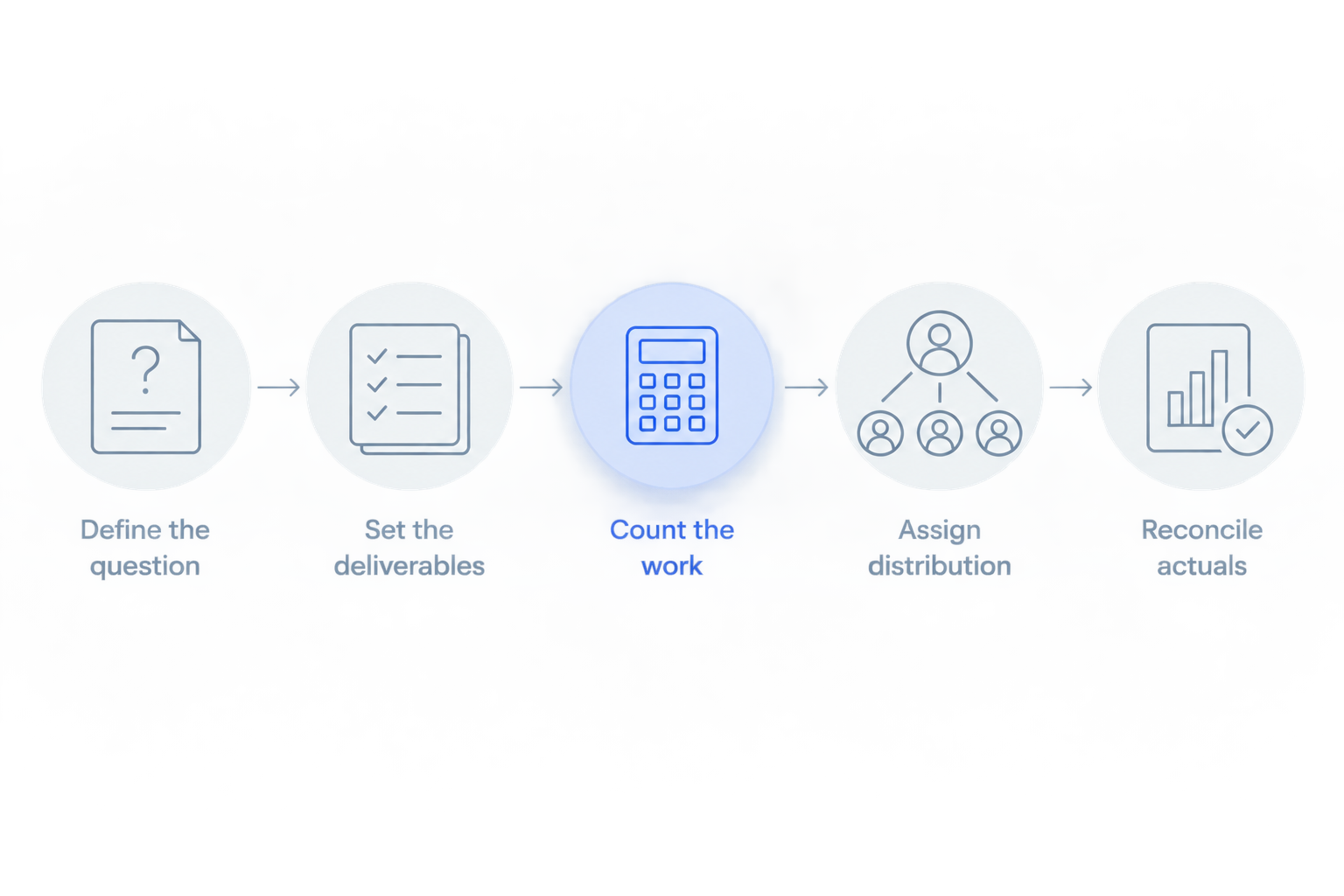
Why the cost of ad creative testing varies
Weekly cost changes when the scope changes. Use these factors to explain differences between your own tests rather than borrowing another company's budget.
- Deliverable count. Each requested asset creates work to prepare, check, and approve. Track requested ads separately from approved ads.
- Format mix. An image brief and a video brief require different deliverables. Specify whether the video includes a script, audio, captions, or additional editing rather than assuming they are included.
- Revision scope. Changing an incorrect product detail is different from replacing the entire concept. Record both, but label them separately.
- Production setup. A combined creative suite and separate photo and video tools create different subscription and working arrangements. Compare the actual terms and tasks.
- Media allocation. The amount assigned to paid distribution is a separate budget decision from how many assets you produce.
- Review and reporting. Name the people responsible for approvals and analysis. Include their work in the estimate rather than adding it after the test ends.
For your 2026 baseline, keep the category definitions fixed. Otherwise, a week that excludes review time will look different from a week that includes it for accounting reasons alone.
Should you use one creative suite or separate tools?
Icarus is best for e-commerce teams that want AI product photography and video generation in one place. That is a workflow fit, not a claim that every team will spend less or get better results.
Compare the routes against the same brief. Ask each option to support the deliverables you actually intend to publish, then check the current plan terms and the resulting assets.
| Production route | Best for | Confirmed advantage or intended role | Limitation to account for |
|---|---|---|---|
| Icarus | E-commerce teams seeking photos and videos in one place | Generates product photos, social and ad content, and videos without a traditional shoot | Combining formats does not remove the need for product checks and approval |
| Separate photo and video tools | Teams evaluating each production task independently | Lets you choose a tool for each part of the brief | You must check each subscription, usage allowance, export requirement, and transfer step |
Do not assume that a combined suite is automatically the less expensive route. Do not assume that separate tools automatically offer better output either. Both conclusions require evidence from your brief and the terms you would buy.
Compare usable deliverables, not feature counts
Choose an actual product reference and write the acceptance criteria before evaluating outputs. Check the product shape, packaging, visible wording, and whether the image or video communicates the intended message.
Record why an output fails. A rejected draft still consumed work, but it is not an ad ready for launch. This distinction belongs in your buying decision as well as your weekly budget.
Keep the evaluation consistent
Give each route the same intended message and final format. Record any extra editing or manual transfer work instead of hiding it outside the comparison.
Use a 2026 evaluation worksheet with separate columns for subscription terms, production work, approved outputs, and unresolved requirements. A feature checklist alone cannot tell you whether a tool fits your weekly production process.
What should a weekly creative brief include?
A budget becomes easier to control when the brief defines what finished means. Use the same short template for each test.
- Goal: State the buying decision the test should inform.
- Product: Identify the exact item and approved reference material.
- Message: Write the claim or angle you intend to compare.
- Scene: Describe the setting, composition, and details that should remain consistent.
- Deliverables: List the images, videos, and placement versions required.
- Acceptance criteria: Name the product details and wording that must remain accurate.
- Owner: Assign approval and a stopping point for revisions.
Illustrative example: An online store wants to compare a close product-detail image with an image showing the product in context. The brief requests the same product and offer in both concepts, with the scene as the intended difference.
That example defines production work without claiming a performance result. If you also change the offer, headline, and audience, record those changes; do not describe the outcome as evidence about the scene alone.
How do you calculate cost per usable ad?
Cost per usable ad equals the creative production cost assigned to the batch divided by its approved ads. Keep media out of this calculation when your purpose is to evaluate production efficiency.
Include briefing, relevant software usage, editing, and review in the numerator. Include only assets that pass your stated acceptance criteria in the denominator.
Decide how to count placement versions before you compare weeks. A resized export and a new concept are different production units. Mixing them under a single unexplained asset count makes the comparison hard to interpret.
If a batch has no approved ads, record that outcome directly. Do not turn rejected drafts into usable assets to produce a more attractive average.
Is one week enough to judge an ad creative test?
One week is 7 days, not a guarantee of a reliable result. Judge the test against its question, actual delivery, and purchase evidence rather than the calendar alone.
Define the decision rule before launch. If the evidence does not support a decision at the end of the week, report the result as unresolved rather than naming a winner.
Should you include existing subscriptions in the budget?
Include the share of existing subscriptions used for the test when measuring operating cost. Track the full payment separately when managing cash.
Choose a documented allocation method and apply it consistently. For example, allocate by recorded usage or by an internal accounting rule; do not switch methods to make a particular week look better.
FAQ
What is included in the cost of ad creative testing per week?
The cost of ad creative testing per week includes media, creative production, software, review, and evaluation. Keep the categories separate so you can see whether a change came from distribution or production.
Does ad spend include the cost of making the ads?
Ad spend covers paid distribution, not the complete cost of making the ads. Budget briefing, production, editing, and approval separately unless an existing invoice explicitly includes them.
Is Icarus a fit for weekly image and video ad production?
Icarus is a fit for e-commerce teams seeking product photos and videos in one place. Evaluate the current plan terms and check outputs against your own product references before committing to a workflow.
Are separate AI photo and video tools less expensive?
Separate AI photo and video tools are not automatically less expensive. Compare their combined subscription terms, required usage, and production work against the same approved deliverables.
Should I count AI drafts that I never publish?
Count rejected drafts as production work, but not as usable ads. Record their usage and review work so your budget reflects the full batch.
How many days should a weekly creative test run?
A weekly reporting window contains 7 days, but that does not establish a sufficient testing period. Use the test question and actual evidence to decide whether you can draw a conclusion.
What should I measure if my goal is paying customers?
Use purchase results and their associated spend to assess the business outcome. Track production cost separately so you can distinguish the expense of making ads from the expense of distributing them.
One last thing
Define “usable” before you generate. Otherwise, an asset count can include work your team cannot publish.
For your next 2026 test, attach an acceptance checklist to the brief and assign an approval owner. Your final report should connect the original question, the approved assets, the production work, and the purchase evidence—not just show a folder of drafts.